
A field guide to the wildest stretch of Arkansas — written by people who actually live on the lake.
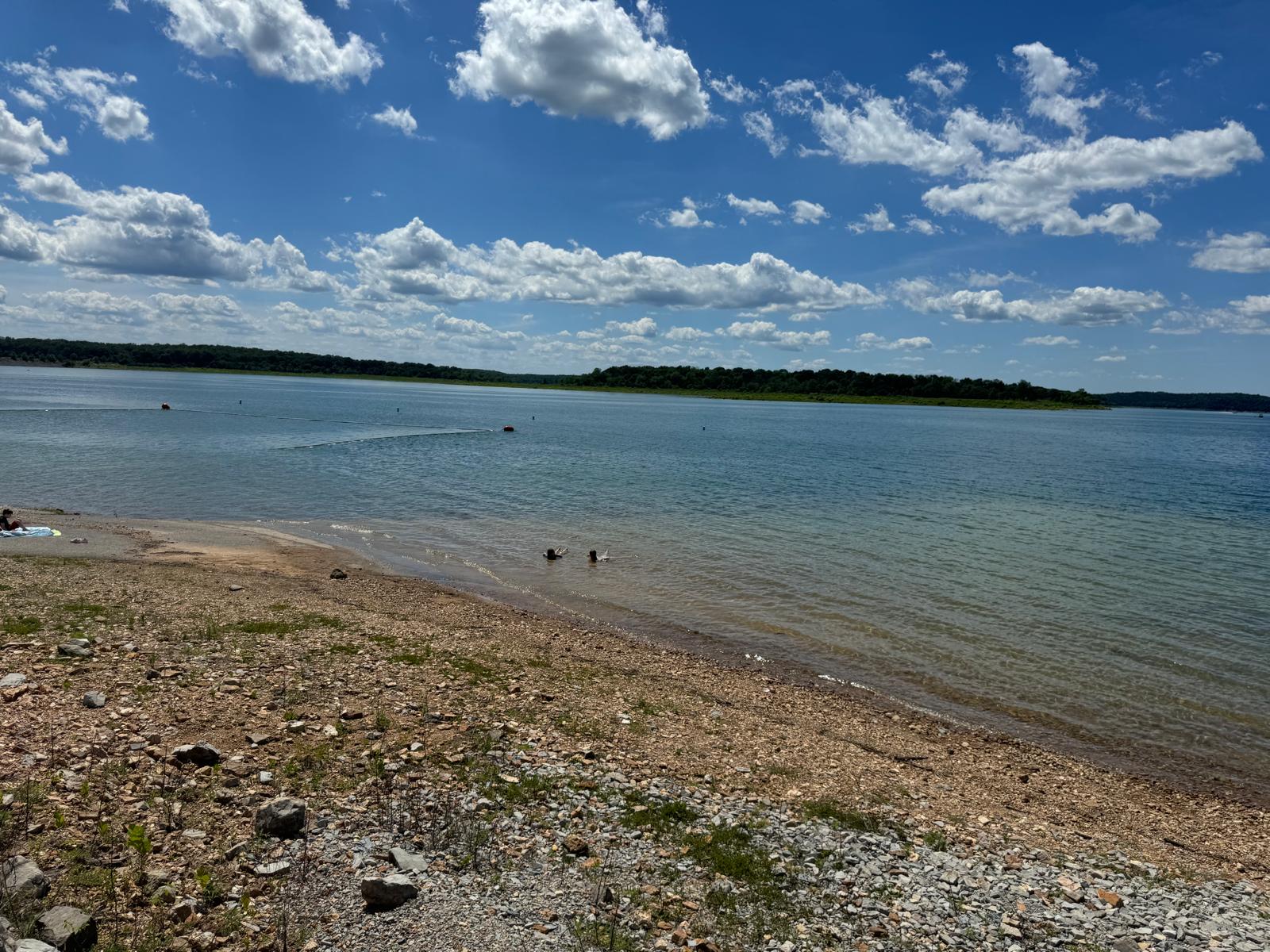
Bull Shoals Lake doesn’t try to impress anyone. It just is. Forty-five thousand acres of clear, cold water carved into the Ozarks, hemmed in by forest, ringed with bluffs, and largely indifferent to whether you show up or not.
That’s exactly the appeal.
If you’re driving in from Memphis, Springfield, Little Rock — or further afield — you’re not coming here for hotel pools and curated experiences. You’re coming because someone told you the night sky looks different here, or because you heard the bass fishing is the best in the country, or because the photos of the cliffs jumping into glassy water finally talked you into it.
Whatever brought you, here’s what you actually do once you arrive.
Fish water that knows your grandfather
Bull Shoals is one of the most storied fisheries in the United States. The lake itself is famous for largemouth, smallmouth, and spotted bass — fish big enough to make you call your friends. But the trophy water is the White River, which begins at the base of Bull Shoals Dam and runs cold and trout-heavy for miles below.
If you’ve never tail-water fished the White, you’re in for a particular kind of pleasure. The water comes out of the dam at around 50 degrees year-round, which means rainbow and brown trout thrive there even in August when the rest of Arkansas is on fire. It also means you’ll want a fleece in the boat, even if it’s 90 degrees on the bank.
If trout is the whole reason for the trip: see our White River trout fishing glamping guide for guides, wade access, and dam generation schedule basics.
Three things to know:
- Licenses are easy. Arkansas Game and Fish sells a non-resident 3-day pass online for less than the cost of dinner.
- Generation schedule matters. The dam releases on a schedule that controls water levels downstream. Plan around it — drift boats need flow, waders need it low.
- Local guides are worth it. Especially the first time. They know which holes are producing and which fly the trout are eating that week.
Get on the water (without owning a boat)
If you’re not fishing, you’re floating. The lake has dozens of marinas and launch points; the closest one to most properties on the southern shore is the Oakland Marina, about two miles from where most of the south-side glamping rentals sit.
What you can do without bringing your own boat:
- Rent a pontoon for the day at any of the marinas. Easy to drive, fits a family, perfect for a slow afternoon with a cooler.
- Kayak or paddle board in the protected coves. The water is clear enough that you can see straight to the bottom in 15 feet.
- Take a guided pontoon tour of the dam and the cliffs if you want narration with your scenery.
If you’re staying at a property with kayaks and paddle boards already on site (most of the better glamping rentals include them), this gets even easier — paddle out, paddle back, no marina trip required.
Cliff jump at Ozark Isle
This is the thing your nephew is going to want to do.
Ozark Isle sits in the middle of Bull Shoals Lake — a small island accessible by boat — and the cliffs along its edges are well-known to anyone who grew up on the lake. There are jumps from a few different heights, ranging from six feet to genuinely terrifying, depending on which rock you scramble to.
A few rules of the road:
- Always check water depth first. Water level changes with the dam’s generation schedule. What was a safe jump last weekend might be shallow this weekend.
- Don’t jump alone, and don’t jump after drinking. People have gotten hurt on these cliffs. Most accidents involve overconfidence and PBR.
- It’s also a great place to just swim. If jumping isn’t your thing, the coves around the island have some of the clearest, calmest water on the lake.
Walk the Bull Shoals Dam
You don’t have to be an engineering nerd to find Bull Shoals Dam impressive. It’s the fifth-largest concrete dam in the United States — 256 feet tall, more than 2,000 feet across — built in the early 1950s and still doing the job. There’s a free visitor center at the base where you can walk out onto the structure, look down the spillway, and read about how this whole lake got here.
Combine it with a stop at the White River bluffs just downstream — those bluffs give the river its character, and there are several short hikes that wind along the cliffs with overlooks straight down to the water.
Hike the trails most people don’t know about
Bull Shoals-White River State Park, on the Arkansas side of the dam, has a few miles of trails that are well-marked and family-friendly — good for half-day exploration. The bigger payoff is for hikers willing to drive a bit:
- Buffalo National River is roughly 90 minutes east. America’s first National River. Day hikes range from “easy stroll along the gravel bar” to “real elevation, bring water.” The cliffs along the Buffalo are some of the best scenery in the state.
- Mountain bike trails are scattered throughout the area. Locals will point you to favorites — the Ozark hills make for genuinely good riding.
See a sky you’ve forgotten exists
This is the one nobody talks about enough.
Bull Shoals Lake sits in one of the darkest stretches of sky in the central United States. There’s no major city closer than Springfield (90 minutes north) or Little Rock (3 hours south). Cell coverage is spotty by design — much of the southern shore has minimal light infrastructure, and the lake stretches for miles in every direction with nothing but trees and water reflecting the sky.
What that means in practice: on a clear, moonless night, you can stand on a deck and see the Milky Way arcing overhead — the actual structure of our galaxy, not the washed-out version everyone gets in the suburbs. You can see meteors most nights of the year. In August, during the Perseids, you can see one every few minutes.
If dark skies are why you came: Capricorn is our forest dome — no lake view, but the darkest sky on the property. Or see our full dark sky glamping guide for the property’s Bortle classification, meteor shower calendar, and best moon phases.
This is something most American kids have never experienced. Bring them up here, get them out from under a roof, and let them look up. It changes them a little.
Where to actually eat
You’re not coming to Bull Shoals Lake for the dining scene — but a few places are worth knowing about:
- Oakland Marina restaurant — casual, on the water, serves burgers and beer with a view that nobody could overcharge for and yet they don’t.
- The closest grocery is in Mountain Home, about 30 minutes from the southern shore. Stock up before you arrive — the local convenience stores can handle a missed ingredient but not a full week.
- Mountain Home itself has a few legitimately good local restaurants if you want a night out.
Most people staying out here cook in. The getting away from it all part includes the kitchen.
When to go
The lake has four real seasons, and each one offers something different:
- Spring (April–May): bass spawning, comfortable temperatures, fewer crowds. Wildflowers in the woods.
- Summer (June–August): peak swimming and boating weather. Hotter days, warmer water, more people. Stargazing peaks during the August Perseids.
- Fall (September–October): in our biased opinion, the best time. The lake is still warm enough to swim, the leaves are turning, and the crowds are gone.
- Winter (December–February): surprisingly good. The lake is quiet, trout fishing is excellent, and the sky is even clearer.
If you have flexibility, late September through early November is the sweet spot most years.
Where to stay
There are plenty of places to lay your head around Bull Shoals Lake — cabins, lodges, the occasional hotel. We’re biased, obviously, because we built our own.
Falling Stars sits on 85 wooded acres on the Arkansas side of Bull Shoals Lake, about 10 miles south of the Missouri border. We have six geodesic domes — each with its own fire pit, hot tub, and direct lake access — built specifically for the kind of trip described above. You can launch a kayak from the shoreline, walk to a fishing spot, and then come back and watch the Milky Way come up over the water without leaving your deck.
Driving in from a specific city? We have dedicated guides for Branson, Eureka Springs / NW Arkansas, Little Rock, Tulsa, Memphis, Kansas City, St. Louis, Oklahoma City, Wichita, and Dallas / Fort Worth — or see our full Plan Your Trip hub.
Coming as a couple? See couples getaway domes at both properties.
If that sounds like the trip you came here for, we have rooms.
Have a question about the area? Want to know if November is too cold to swim? Email matt@fallingstarsatbullshoalslake.com — we live here, and we like talking about it.